
Building Your Mental Health Toolkit: Evidence-Based Practices You Can Start Today
Simple, Accessible Strategies That Actually Work When You're Struggling
When you're in the middle of a panic attack, depressive episode, or anxiety spiral, being told to "just breathe" or "think positive" feels useless. What you need are concrete tools that produce measurable relief—techniques backed by research that work even when your brain is telling you nothing will help.
Mental health care shouldn't require a waitlist, expensive therapy sessions, or prescription medications to begin (though those absolutely have their place). There are evidence-based practices you can start implementing today that reduce symptoms, improve emotional regulation, and build resilience over time.
These aren't replacements for professional treatment when you need it. They're tools for daily mental health maintenance, crisis management between therapy appointments, and building the foundation that makes professional treatment more effective when you pursue it.
Here's what actually works—and how to implement it in your life starting now.
Breathwork: The Most Underrated Mental Health Tool
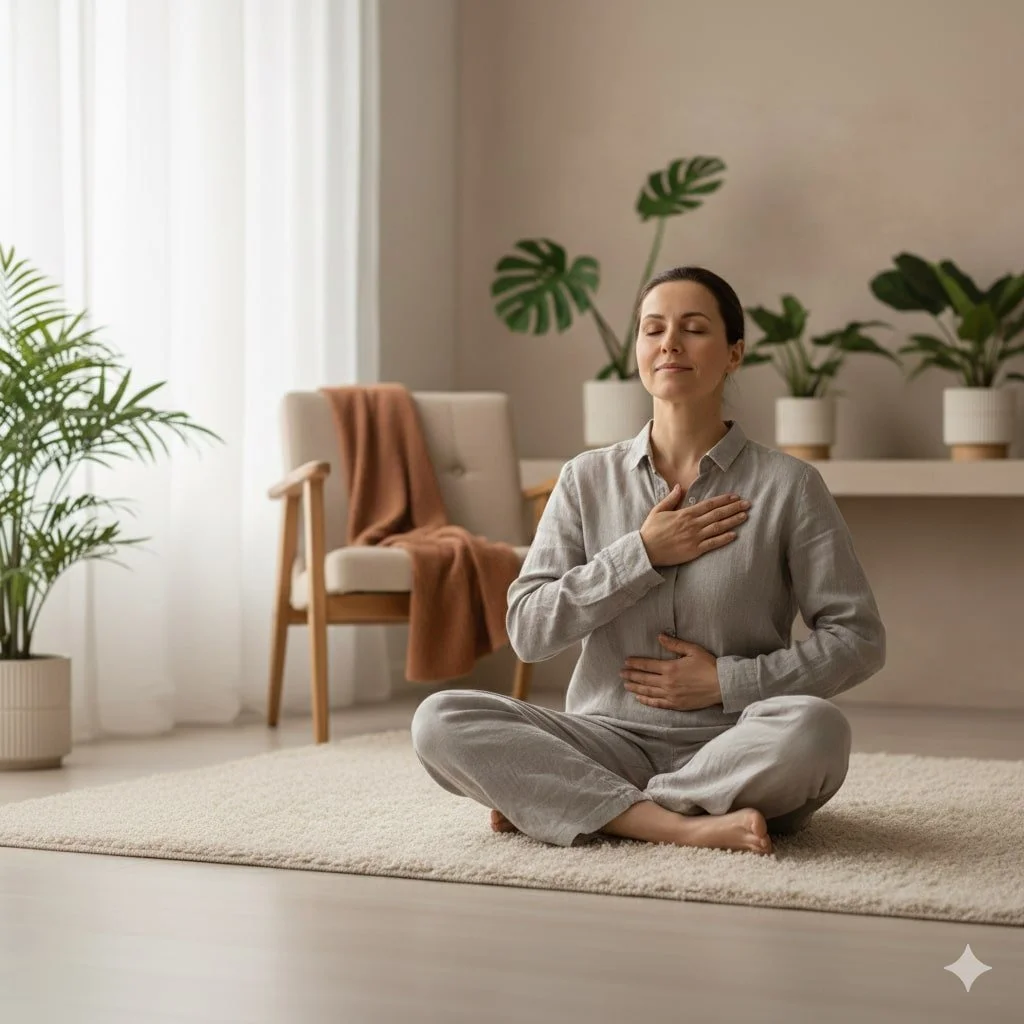
Controlled breathing might be the single most accessible, immediately effective mental health intervention available. It's free, works anywhere, produces measurable changes within minutes, and requires no equipment or training beyond learning the technique.
Why Breathwork Works:
Your breathing pattern directly influences your nervous system. Rapid, shallow breathing signals danger to your brain, triggering anxiety responses. Slow, controlled breathing activates the parasympathetic nervous system, telling your brain you're safe and triggering physiological calm.
This isn't placebo—it's measurable biology. Heart rate decreases, blood pressure drops, cortisol levels fall, and heart rate variability (a measure of stress resilience) improves within minutes of controlled breathing.
The Three Breathing Techniques Everyone Should Know:
Box Breathing for Acute Anxiety: Inhale 4 seconds, hold 4 seconds, exhale 4 seconds, hold 4 seconds. Repeat for 3-5 minutes. Use this during panic attacks, before stressful situations, or when anxious thoughts spiral. The counting gives your mind something to focus on while the breathing pattern calms your nervous system.
4-7-8 Breathing for Sleep and Deep Calm: Inhale 4 seconds, hold 7 seconds, exhale 8 seconds. Repeat 4-8 times. The extended exhale activates deep parasympathetic response. Many people report this is the first technique that actually helps them fall asleep without medication.
Coherent Breathing for Daily Resilience: Inhale 5 seconds, exhale 5 seconds. Practice for 10-20 minutes daily to build baseline stress resilience. This rhythm (roughly 6 breaths per minute) optimizes heart rate variability and autonomic nervous system balance.
The challenge with breathwork during anxiety is that counting while panicking is difficult. Tools like the Breathwork Timer provide visual and audio cues guiding you through patterns without requiring you to count—you just follow the prompts. This makes the practice accessible when you need it most.
Guided Audio Sessions: Support Between Crisis and Treatment
One of the biggest gaps in mental health care is what happens between therapy appointments—or when you can't access therapy at all. You're managing symptoms alone with only the coping strategies you remember from last week's session.
Guided Audio Sessions fill this gap by providing structured support you can access anytime. These aren't substitutes for therapy, but they extend therapeutic benefits into daily life and provide crisis intervention when you need help immediately.
How to Use Guided Audio Effectively:
For Anxiety Management: Keep a 10-15 minute guided relaxation session on your phone for anxiety episodes. When you feel panic building, having a structured audio to follow prevents the mental spiral that makes anxiety worse. You're not trying to "calm down" through willpower—you're following specific instructions that physiologically create calm.
For Sleep Issues: Insomnia accompanies most mental health conditions. Guided sleep meditations or body scans help transition from anxious alertness to sleep readiness. The key is using the same audio consistently—your brain learns to associate it with sleep, strengthening the effect over time.
For Depression and Motivation: When depression makes even basic tasks feel impossible, guided sessions providing structure for movement, self-care, or mindfulness create external scaffolding when internal motivation is absent. You're not generating motivation from nothing—you're borrowing structure from the audio until you can create it yourself.
For Grounding and Dissociation: People experiencing trauma responses or dissociation need grounding techniques bringing them back to present reality. Guided grounding exercises with specific sensory prompts (what you see, hear, feel, smell, taste) interrupt dissociative states more reliably than trying to ground yourself without structure.
The effectiveness comes from regular use, not just crisis intervention. Daily 10-minute practice during stable periods builds skills and nervous system resilience that make crisis management more effective when you need it.
Progressive Muscle Relaxation: Releasing Physical Tension
Anxiety and stress manifest physically—tight shoulders, clenched jaw, tension headaches. Your body holds mental health symptoms in ways you might not consciously notice until the tension becomes pain.
Progressive Muscle Relaxation (PMR) systematically tenses and releases muscle groups, teaching you to recognize and release tension while triggering parasympathetic nervous system activation.
The Basic Practice: Starting with your toes, tense the muscles for 5 seconds, then release completely for 10 seconds. Notice the difference between tension and relaxation. Progress through your entire body: feet, calves, thighs, glutes, abdomen, back, chest, hands, arms, shoulders, neck, face.
A full session takes 15-20 minutes and produces measurable relaxation. Many people discover they've been holding tension they weren't aware of—and that releasing it significantly reduces anxiety.
Movement as Mood Medicine
Exercise for mental health isn't about fitness goals or weight loss—it's about using movement as biological intervention for mood, anxiety, and stress.
Depression: Moderate aerobic exercise (walking, jogging, cycling) for 30+ minutes 3-4x weekly shows antidepressant effects comparable to medication for mild-to-moderate depression. The biological mechanisms include increased BDNF (brain-derived neurotrophic factor), improved neuroplasticity, and endorphin release.
Anxiety: Resistance training and yoga particularly effective. Weight lifting provides controlled stress exposure building stress resilience. Yoga combines movement, breathing, and mindfulness, addressing anxiety through multiple mechanisms.
ADHD: High-intensity exercise temporarily improves focus and executive function, providing non-medication symptom management for some people.
The key is consistency over intensity. A 20-minute daily walk helps more than occasional intense workouts. Movement you'll actually do consistently beats optimal exercise you won't maintain.
Journaling for Emotional Processing
Writing about difficult emotions and experiences produces measurable mental health benefits—reduced depression and anxiety symptoms, improved immune function, and better emotional regulation.
Effective Journaling Approaches:
Expressive Writing: Write continuously for 15-20 minutes about something difficult you're experiencing. Don't edit, don't worry about grammar, just write whatever comes. Research shows this reduces rumination and helps process complex emotions.
Gratitude Practice: Write three specific things you're grateful for daily. The specificity matters—not "my family" but "my daughter's laugh when I tickled her today." This rewires attention toward positive experiences without denying difficulties.
Thought Records: Write anxiety-provoking thoughts, then evidence for and against them. This cognitive technique (from CBT) helps identify distorted thinking patterns and develop more balanced perspectives.
Building Your Personalized Toolkit
Mental health is individual—what works for one person might not work for another. Build your toolkit by experimenting systematically:
Choose one technique (start with breathwork—it's the most universally effective)
Practice daily for 2 weeks (not just during crisis)
Track your mood and symptoms (notice patterns and improvements)
Add techniques incrementally (one at a time, not all at once)
Identify what works for YOU (research shows what works on average; you need what works for you specifically)
The Bottom Line
Accessible mental health tools exist that work—breathing techniques supported by decades of research, guided practices proven to reduce symptoms, movement shown to produce biological mood changes. These aren't wishful thinking or pseudoscience; they're evidence-based interventions producing measurable results.
You don't need to wait for therapy (though therapy is valuable). You don't need prescriptions (though medication helps many people). You can start building mental health resilience today with practices that cost nothing and work anywhere.
Your mental health deserves the same attention and maintenance as your physical health. These tools provide that maintenance—reducing daily symptoms, building resilience, and creating the foundation for thriving, not just surviving.
