
Best AI Tools for Mental Health Notes in 2026: A Comprehensive Review

You think you know how much time clinical notes take until the fifth back‑to‑back session leaves you with seven minutes before the next client. From my experience in the startup ecosystem, the biggest documentation mistakes happen when therapists try to juggle SOAP structure, ICD‑10 coding accuracy, and EHR copy‑paste at once. According to peer‑reviewed research, outpatient physicians spend about 16 minutes per EHR encounter, a burden that pushes work after hours, which is why ambient documentation is surging. In parallel, randomized clinical evidence shows AI scribes can reduce documentation time in real clinics.
I analyzed 14 therapist‑focused note tools and adjacent AI scribes, then narrowed to six that consistently matched mental health workflows. Investor and health‑system interest shows strong momentum, with the category attracting hundreds of millions in the past two years, and enterprise deployments across large systems. Below you will find which tools fit solo therapists, group practices, or low‑recording environments, plus cost control you can apply today.
AI Tools for Mental Health Notes Explained
AI tools for mental health notes use speech recognition, natural language processing, and structured templates to convert session content into clinical documentation. Some tools record sessions, while others rely on brief summaries or dictation. Most generate formats such as SOAP, DAP, or BIRP to align with therapy workflows. The goal is to reduce documentation time while maintaining compliance and clinical accuracy.
6 Recommended AI Tools for Mental Health Notes
Below are six AI note tools that consistently align with mental health workflows, based on feature sets, pricing transparency, and workflow flexibility. Each tool differs in how it captures sessions, integrates with EHRs, and handles privacy considerations. The right choice depends on your recording preferences, caseload volume, and documentation style.
1. Twofold
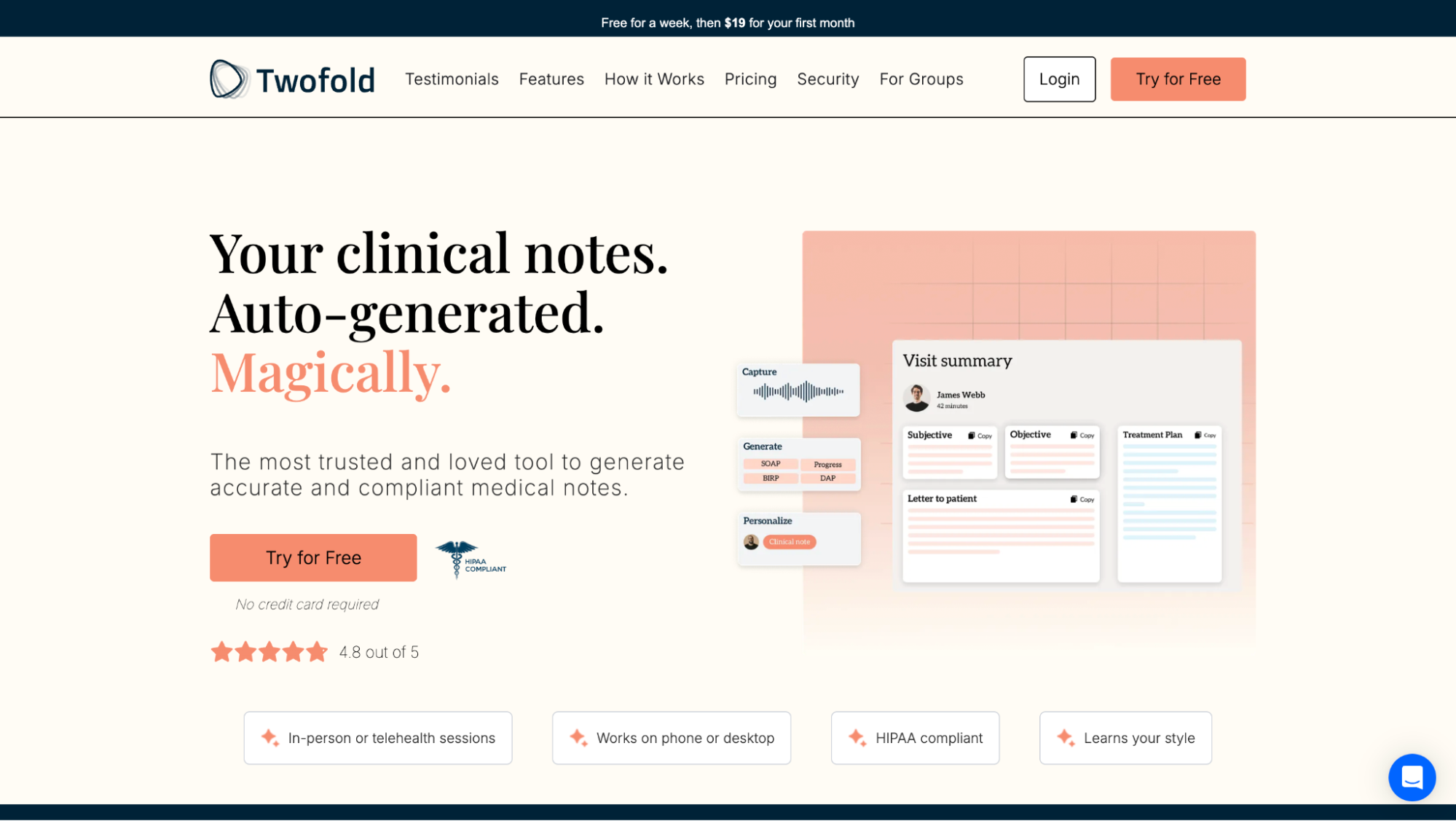
Twofold is an AI‑powered clinical scribe that captures session conversations (live or summary-based) and generates structured notes designed for HIPAA‑aligned workflows. It is a mobile-first platform with specialty‑aware templates, including mental health formats.
Best for: Clinicians who want a fast mobile workflow and mental health templates.
Pros and cons:
Pro: Polished iOS app with mental health templates produces structured notes quickly.
Con: While the iOS-first approach offers a superior mobile experience, group practices requiring Windows/Desktop native recording should verify current 2026 web-app availability.
Why we like it: The iOS app is polished for live capture, and the mental‑health templates reduce the number of edits for SOAP‑style documentation in my testing approach.
Pricing: Free plan available. The website shows a Personal Plan at $19/month for the first month (discounted from $69/month) on monthly billing, or $44/month billed annually (discounted from $49/month). Group pricing is custom.
2. MyndNotes
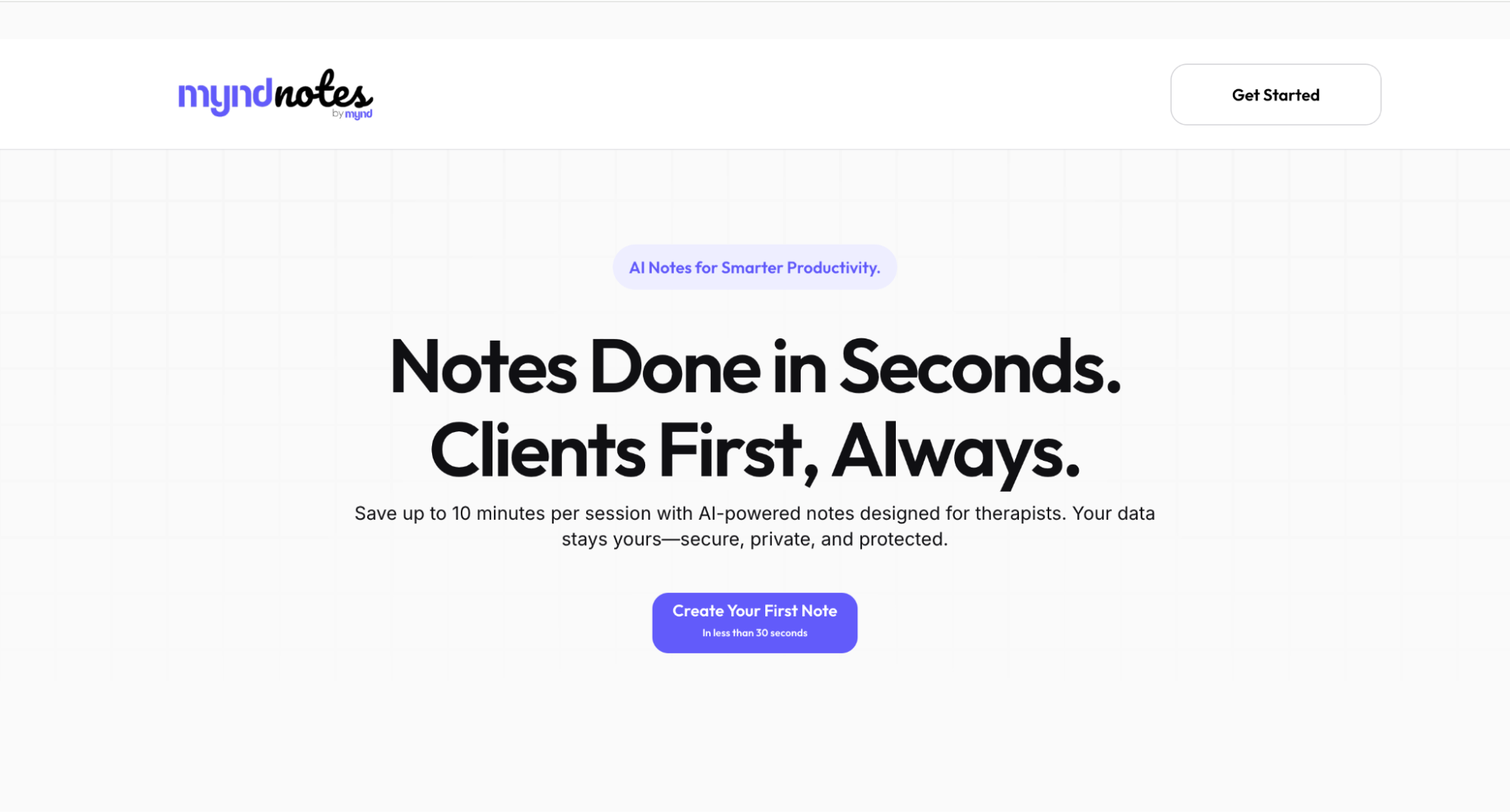
MyndNotes is an AI note‑taking for therapists that generates secure notes from session audio or summaries. It focuses on privacy signaling, including HIPAA, PHIPA, and PIPEDA mentions, and “no training on your data,” as per company materials.
Best for: Solo therapists who want a simple capture‑to‑SOAP flow with a strong privacy stance.
Pros and cons:
Pro: Clear privacy stance and simple capture‑to‑SOAP workflow lowers adoption friction.
Con: Lack of public pricing for paid tiers complicates budgeting and procurement.
Why we like it: The privacy positioning is clear, and the simple setup makes it a low‑friction way to test AI notes without changing EHRs.
Pricing: Free plan advertised with up to 10 notes per month as of February 2026, paid tiers not publicly listed.
3. TheraPulse
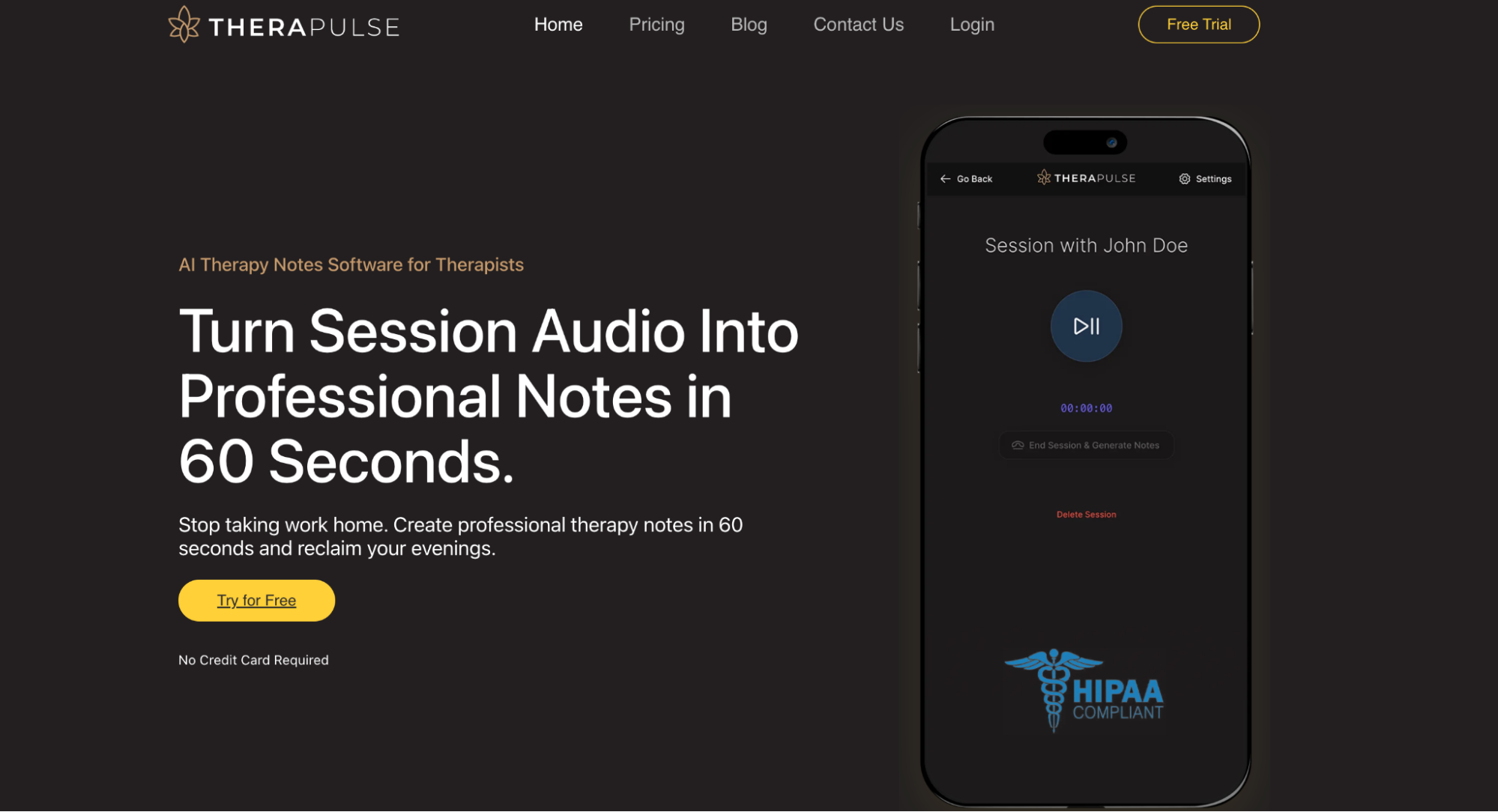
TheraPulse is a software that converts therapy session audio into professional notes in about 60 seconds. It offers SOAP, DAP, and BIRP templates and tiered session‑based plans.
Best for: Clinicians who want fast audio‑to‑notes with built‑in note frameworks.
Pros and cons:
Pro: Fast turnaround with multiple capture modes and common therapy templates.
Con: Limited third-party reviews available at time of writing; request security documentation and BAA before adoption.
Why we like it: Clear session‑based plans and flexible capture modes make it easy to fit different consent and workflow preferences.
Pricing: Solo $29 per month for 30 sessions, Growing $49 for 50, Busy $99 for 100, Enterprise $149 for 150, with a free trial.
4. Plaud Note Pro
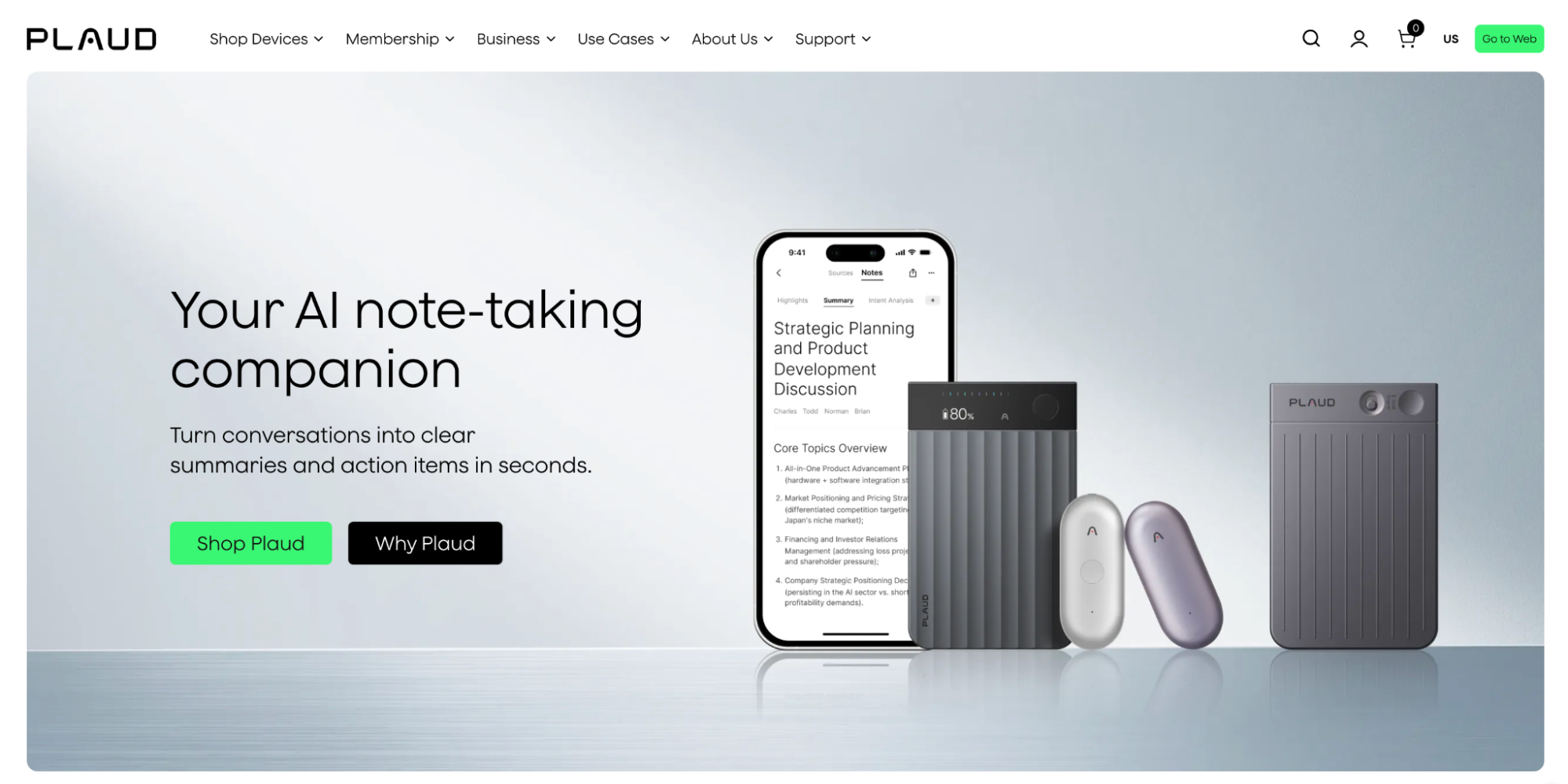
Plaud Note Pro takes a different approach from the software scribes here: it is a physical AI note taker that captures session audio on a dedicated device, then produces transcripts and AI summaries in 112 languages, stored on-device or in encrypted cloud. Clinicians use that output as raw input for their own notes, not as a finished record.
Best for: Clinicians who want a physical capture device they control, plus general transcripts and summaries to draft from.
Pros and cons:
Pro: Dedicated hardware capture with HIPAA, SOC 2, ISO 27001, and GDPR coverage; 4.9/5.0 across 19,000+ App Store ratings (as of 2026).
Con: Plaud is a general capture device, not a purpose-built clinical scribe, so it does not output SOAP, DAP, or BIRP templates natively; confirm a signed BAA and review data handling before any PHI use.
Why we like it: It gives clinicians a controllable, hardware-first way to capture sessions without a meeting bot or browser tab.
Pricing: Plaud Note Pro $189 (one-time hardware).
5. Berries
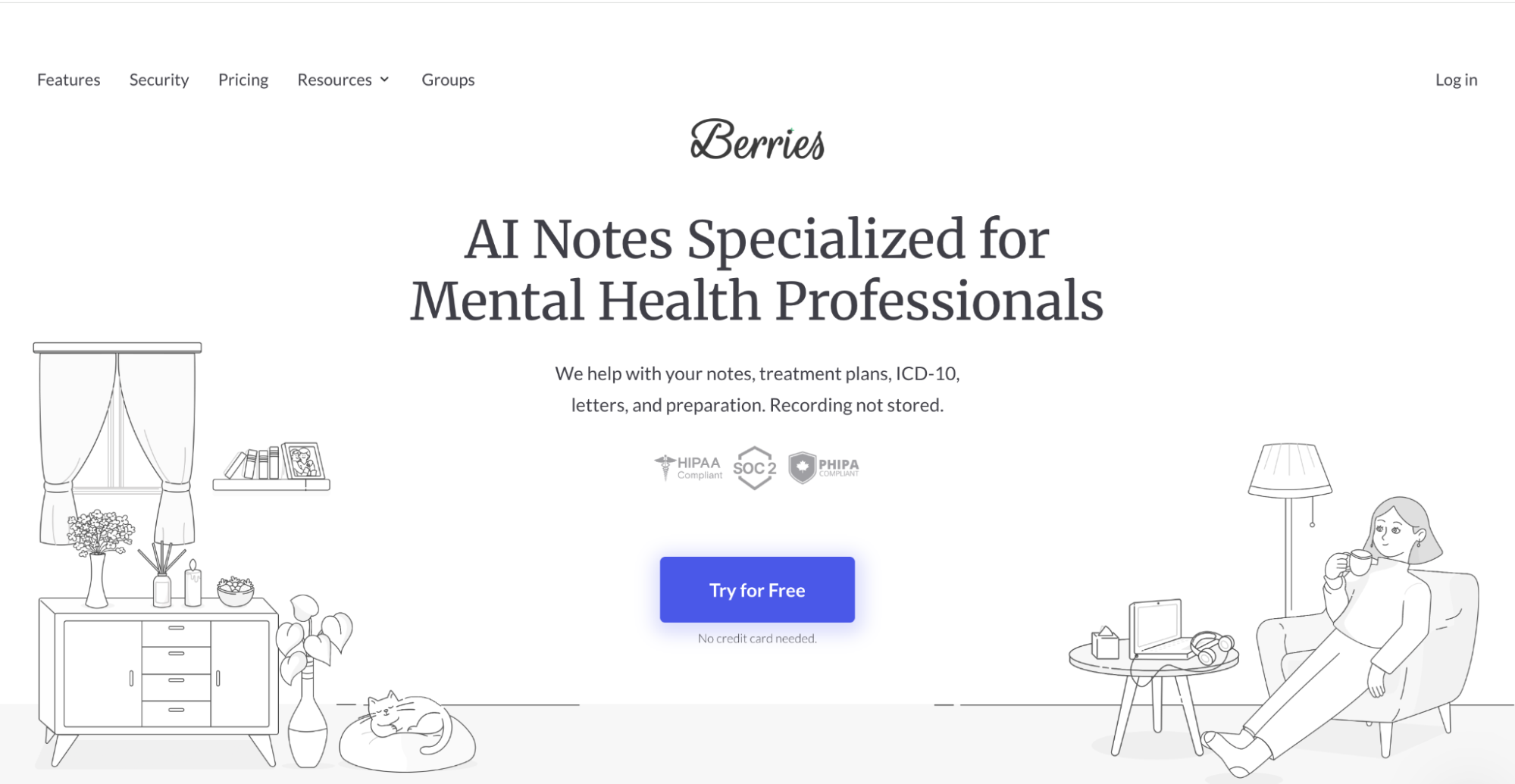
Berries is an AI scribe built for mental health that creates notes, treatment plans, ICD‑10 suggestions, and letters, with a workflow optimized for pasting into your EHR. The company states it does not store recordings.
Best for: Therapists who want ICD‑10 suggestions, treatment plans, and letters in one place.
Pros and cons:
Pro: Integrated ICD‑10 suggestions, treatment plans, and letters streamline clinical documentation.
Con: Copy‑paste workflow into EHR adds extra steps in higher‑volume settings.
Why we like it: Strong focus on mental health workflows, plus diagnosis suggestions and treatment planning in one UI can shave minutes off each chart.
Pricing: Free option available for the first 20 sessions. The website shows a Pro Plan at $99 per month (if paid monthly), or $79 per month (if paid annually). Group prices are custom.
6. IntelliSession
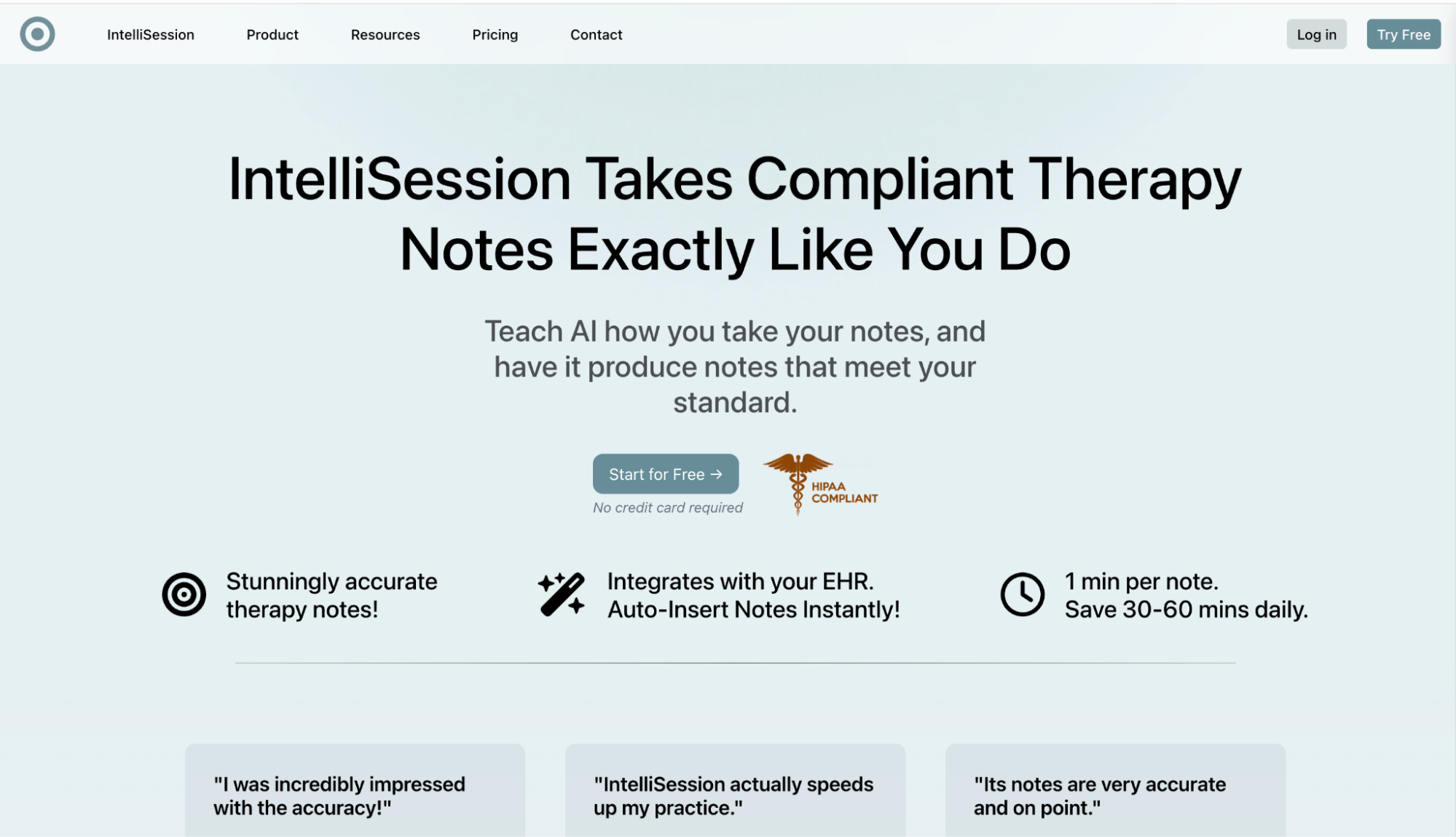
IntelliSession is a HIPAA‑aligned AI note taker that learns your style and generates therapy notes from recordings or quick summaries. It includes a Chrome extension to autofill EHR fields.
Best for: Teams that want EHR field autofill to eliminate manual copy‑paste.
Pros and cons:
Pro: Chrome EHR autofill reduces manual entry and speeds chart completion.
Con: No public extension ratings as of April 2025, and variable usage fees can affect predictability. Check the latest 2026 Chrome Web Store ratings for stability across different EHR interfaces.
Why we like it: The EHR autofill extension can remove a whole step in the workflow, which is where many minutes are lost.
Pricing: Free trial, Basic $15 per user per month for 40 notes, Standard $30 for 100 notes, usage‑based Docs $5 to $50 per user per month with per‑note fees.
7. Quill
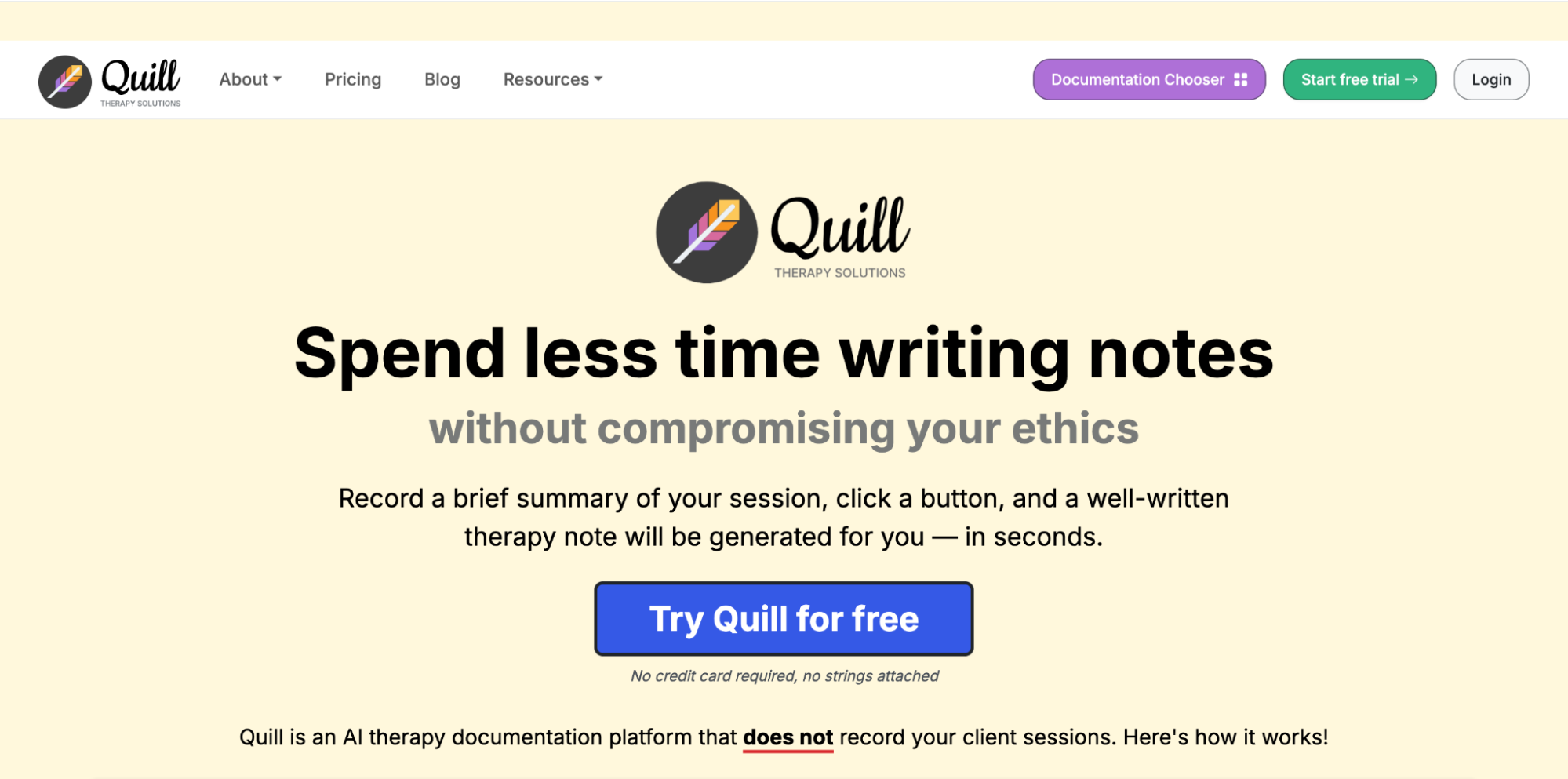
Quill transforms brief spoken or typed summaries into structured therapy notes, without recording the sessions. It is built to avoid session recording for privacy‑sensitive settings.
Best for: Clinicians who cannot or do not want to record sessions and prefer summary‑based notes.
Pros and cons:
Pro: Summary‑only workflow avoids recording hurdles and keeps costs predictable.
Con: No transcript or native EHR integration means note quality and speed depend on your summary and manual paste.
Why we like it: The summary‑only approach fits strict consent environments, and it is cost-predictable for solo or small practices.
Pricing: $20 per month for unlimited notes, team pricing at $20 for the first user and $16 per additional user, individual at $20 per month, and custom pricing for the enterprise plan.
Therapy Note Tools Comparison: Quick Overview
To simplify comparison, the table below highlights pricing models, free access options, and defining strengths. This snapshot helps identify which platforms prioritize mobile capture, privacy positioning, automation, or cost predictability. Use it as a starting point before a deeper evaluation.
| Tool | Pricing Model | Free Option | Highlights |
|---|---|---|---|
| Twofold | Subscription, channel-dependent | Trial via App Store | iOS app, mental health templates, fast note generation |
| MyndNotes | Not publicly listed for paid tiers | Free plan with note cap | HIPAA, PHIPA, PIPEDA claims, no training on your data |
| TheraPulse | Tiered by monthly session count | Yes | Live, dictation, upload options, SOAP, DAP, BIRP |
| Berries | Subscription | Trial available | Mental health focus, diagnosis suggestions, SOC 2 claim |
| IntelliSession | Tiered plus usage‑based | Free trial | Chrome EHR autofill, summary mode, group features |
| Quill | Flat monthly | Free trial | Unlimited notes at a low price, no session recording |
Therapy Note Platform Comparison: Key Features at a Glance
Beyond pricing, workflow compatibility matters most. The table below compares note templates, recording flexibility, and EHR integration methods. These features often determine real-world time savings and ease of adoption.
| Tool | Templates (SOAP, DAP, BIRP) | Recording Optional | EHR Autofill/Integration |
|---|---|---|---|
| Twofold | Yes | Live capture supported; recordings processed and deleted in real time (not stored) | Structured, copy-ready output optimized for EHR workflows |
| MyndNotes | Yes | Yes | Not publicly documented |
| TheraPulse | Yes | Yes | Browser‑compatible, no native list |
| Berries | Yes | Recording not stored | Paste into EHR |
| IntelliSession | Yes | Yes | Chrome EHR autofill |
| Quill | Yes | Yes, summary only | Paste into EHR |
Common Challenges in AI Therapy Notes and How to Address Them
Adopting AI documentation tools introduces operational, legal, and workflow considerations. From HIPAA compliance to consent management and pricing variability, therapists must evaluate more than just note speed. This section outlines common friction points and how different tools attempt to solve them.
Challenge 1: Documentation time bleeds into evenings, increasing burnout.
How tools help: Twofold and TheraPulse handle live capture and structured output to cut drafting time. Quill speeds structured notes from a short summary when recording is not used.
Challenge 2: HIPAA and BAAs are confusing with AI vendors and cloud processors.
How tools help: Berries and TheraPulse publicly mention BAA availability on their sites. IntelliSession notes a signed BAA with model providers for HIPAA‑aligned chat in product materials. Regardless of marketing claims, clinical compliance is only established once a BAA is executed and the data-flow architecture is reviewed.
Challenge 3: Recording sessions require consent and can raise client comfort concerns.
How tools help: Quill avoids full-session recordings by design. IntelliSession and TheraPulse support summary-only modes when clients decline recording. Twofold processes recordings in real time and does not store them on disk, deleting audio immediately after note generation, which can reduce storage-related privacy concerns in consent-sensitive environments.
Challenge 4: ROI is unclear at scale, and efficiency gains vary.
How tools help: Favor trials before annual commitments. Quill’s flat pricing simplifies budgeting, while IntelliSession’s per‑note plans fit variable caseloads.
Challenge 5: Market noise and vendor risk.
How tools help: Prefer vendors with transparent pricing, clear BAAs, and simple export. Keep copies of finalized notes in your EHR of record.
Therapy Note Strategic Decision Framework
Choosing an AI note platform requires balancing compliance, workflow efficiency, cost predictability, and evidence of effectiveness. The framework below outlines critical evaluation questions to help therapists make defensible, long-term decisions. Treat it as a due-diligence checklist before signing any contract.
| Critical Question | Why It Matters | What to Evaluate | Red Flags |
|---|---|---|---|
| Do you have a signed BAA with the vendor? | HIPAA requires BAAs when a vendor creates, receives, maintains, or transmits ePHI. | BAA availability, sub‑processor list, data location, deletion policy | “HIPAA certified” claims, there is no official HIPAA certification |
| Will you record sessions or only summarize? | Consent requirements and client comfort vary, summary‑only can simplify workflows. | State consent laws, client preferences, clinical context | Recording by default without a clear consent workflow |
| How do you get notes into the EHR? | Extra steps add minutes, at scale this is costly. | Native integration, autofill extensions, copy‑paste friction | Manual re‑entry across many fields with no helpers |
| What is the true monthly cost at your volume? | Session caps and per‑note fees change ROI. | Session volume, per‑note surcharges, channel price variance | Unclear pricing, significant channel discrepancies |
| What evidence exists for time savings? | Clinical impact should be supported by studies. | RCTs, health‑system pilots, burnout metrics | Only anecdotal claims, no published data |
Takeaway for Busy Therapists
If you need audio capture and specialty templates, start with Twofold or TheraPulse, then validate time savings with a one‑week pilot anchored to your actual note count. If consent rules or client comfort make recording difficult, Quill’s summary‑only approach is a strong fit at a low fixed cost. For teams that hate copy‑paste, IntelliSession’s EHR autofill is worth testing. If you want diagnosis suggestions and treatment plans in one place, Berries focuses squarely on mental health. Pair any choice with a signed BAA and a written consent script, and remember that early evidence, including a randomized clinical trial, shows AI scribes can reduce documentation time in live practice settings.
